Practical Insights for Personal, Professional and Environmental Alignment.
Our you tube channel | protimesh.com , makes videos keeping in mind the following objectives. Explore practical insights into astrology, numerology, Vastu, Ayurveda, Prakriti Type Analysis, Triguna Analysis, Prosperity Analysis, Leadership Analysis, Key Person Evaluation, business suitability, workplace planning, and environmental optimisation through an integrated, application-oriented approach.
The objective of this content is not simply to discuss traditional concepts in isolation. It is to understand how different analytical systems can guide and diagnose an individual, their role, their workplace, and their living or working environment. The focus remains on practical interpretation, thoughtful evaluation, and solutions that we can realistically implement.
Understanding the Individual Every organisation, business, profession and property ultimately involves people. Therefore, environmental analysis alone may not provide the complete picture. Our discussions explore astrology and horoscope analysis as traditional frameworks for understanding individual tendencies, potential strengths, challenges, timing and areas requiring greater attention. Astrology is regarded in conjunction with other analytical methodologies rather than being perceived as the exclusive rationale for every occurrence in an individual’s life.
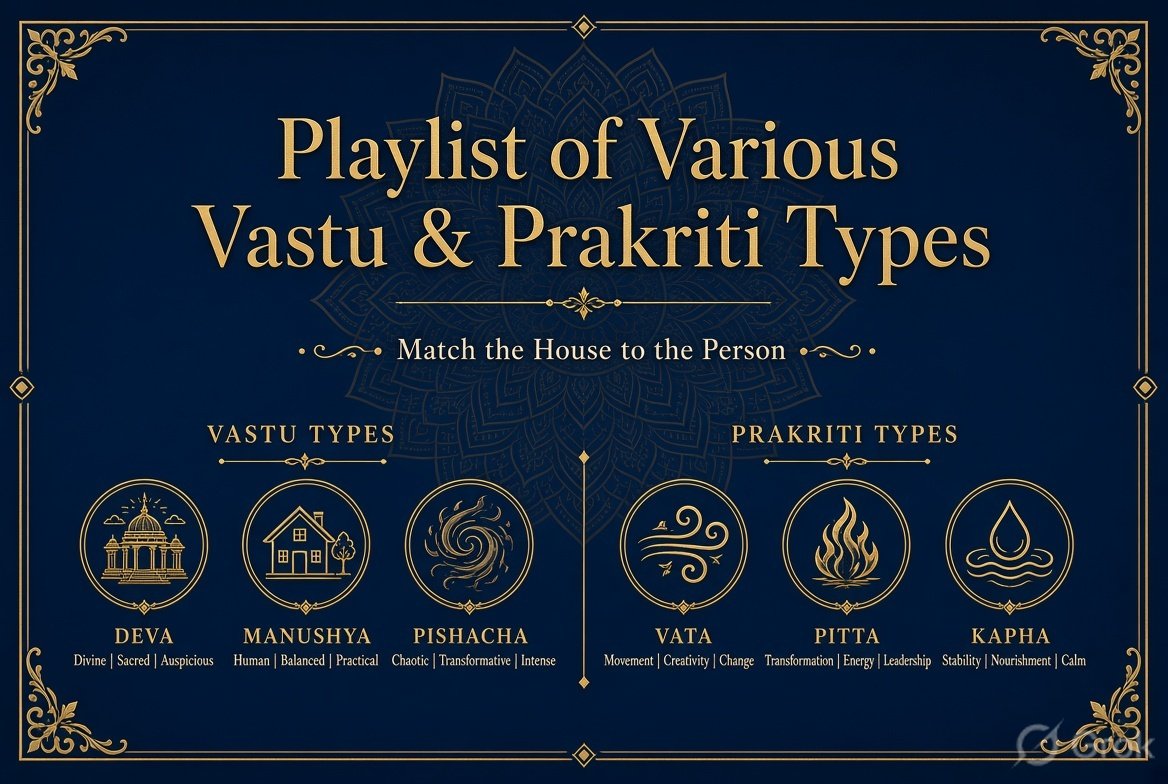
We also explore numerology, including the relationship of names, numbers and other relevant numerical identifiers with the broader analytical profile of an individual. Another important dimension is Ayurveda and Prakriti Type Analysis. Understanding the relative characteristics associated with Vata, Pitta and Kapha can provide another perspective on an individual’s constitutional tendencies, working preferences, lifestyle and interaction with their surroundings.
Similarly, the Triguna Analysis examines Sattva, Rajas and Tamas as another framework for understanding behavioural tendencies and mental orientation. Rather than treating every individual identically, these approaches encourage us to recognise differences in constitution, temperament, behaviour and response patterns. Prosperity, Leadership and Key Person Analysis Prosperity is much broader than simply accumulating money. Our discussions therefore include Lakshmi, Kuber and Owl-based Prosperity Analysis, examining different characteristics connected with earning, managing, preserving and intelligently utilising resources. We also examine leadership analysis to understand how an individual may approach responsibility, decision-making, execution, communication, delegation and organisational roles.
Such analysis becomes particularly relevant for businesses. A business may have an excellent product, sufficient capital and a suitable infrastructure, yet still experience difficulties because a key person has been placed in a role that does not correspond well with their natural capabilities or working characteristics.
Therefore, we discuss methods for evaluating business partners, directors, managers, employees and other key individuals within an organisation. The purpose is not to label someone as good or bad. It is to understand whether the individual appears appropriately aligned with the responsibilities assigned to them. The same approach can help individuals explore questions such as, ‘Which business, profession, service or organisational role may be more suitable for me?’ Instead of relying on a single parameter, we can examine such questions through multiple analytical perspectives. Practical Vastu and Workplace Planning A major part of our work concerns the practical application of Vastu and environmental analysis.
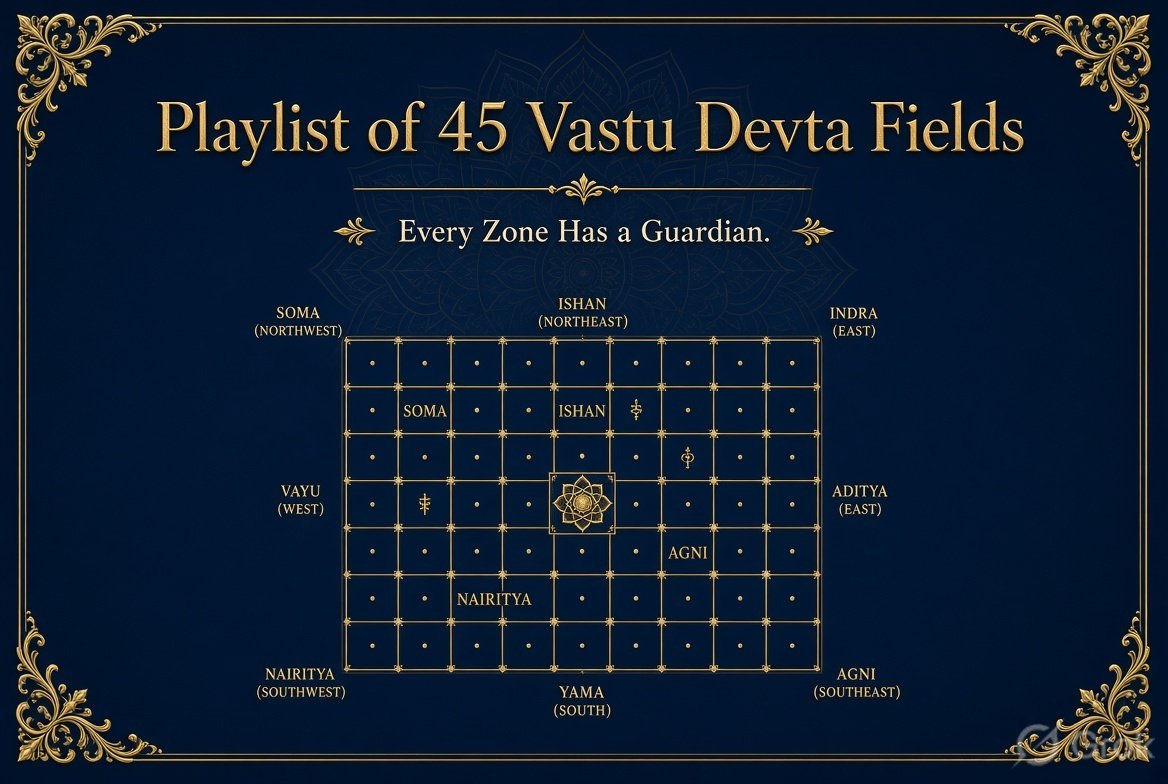
We examine questions such as the most appropriate direction for an important person to sit, the positioning of a work table, the arrangement of important functional areas and the relationship between people and their working environment. However, the environment is much more than direction alone. We also discuss lighting arrangements, colour, sound, air circulation, water, movement, spatial organisation and the overall balance of the internal and external environment.
A workplace should ultimately support the activity taking place within it. Poor lighting can make work uncomfortable. Excessive noise can interfere with concentration. Inadequate ventilation can affect the quality of the working environment. Poorly organised movement paths can waste both time and effort. Improper placement of machinery, storage, workstations or utilities can interfere with operational efficiency.
Therefore, our approach to Vastu attempts to examine the property as a functioning environment rather than merely dividing a floor plan into directions and prescribing symbolic remedies. Factories, Offices and Operational Flow In factories and offices, environmental analysis can become particularly practical. We examine the movement of people, materials and goods; machinery placement; departmental positioning; workstations; utilities; entrances; exits; storage; operational sequences; and workflow. The objective is to identify unnecessary obstruction, inefficient movement and environmental conflicts wherever possible. Reducing waste and improving workflow can help create a more organised workplace. In a factory, even a seemingly small problem in movement or placement may repeatedly consume time and effort when multiplied across hundreds or thousands of operations.
Environmental planning should therefore complement sound management and operational practices rather than replace them. Gates, Construction and Corrective Planning We also examine the location and suitability of entrance gates and access points within a property, along with the relationship between entrances and the broader layout. Existing buildings frequently contain construction or planning features that may be considered unsuitable within the adopted Vastu framework.
The initial response should not automatically be demolition. An important objective is to identify the problematic construction or environmental feature, understand its functional significance and then determine whether a practical correction is possible. Where modification is considered necessary, preference should generally be given to minimum rebuilding and maximum practical optimisation, provided the required correction can be achieved reasonably. This is especially important for factories, offices and expensive residential or commercial properties where unnecessary structural reconstruction can involve substantial cost and disruption.
Understanding the Problem Before Prescribing a Solution Whether the concern comes from an individual, factory owner, office owner, entrepreneur, professional or family, the first task is to understand the actual problem. Different difficulties may have different causes. A business problem should not automatically be attributed to Vastu. Similarly, every personal difficulty should not automatically be attributed to astrology, numerology or an individual’s Prakriti. Management deficiencies, financial constraints, inappropriate staffing, operational inefficiency, structural problems, environmental discomfort and individual decision-making can all contribute to an outcome. An integrated approach therefore attempts to examine the problem from different perspectives and identify where meaningful intervention may be possible.
Our Final Perspective on Vastu
Our central philosophy is straightforward. Vastu can be used as a guiding framework for optimising the internal and external environments in which you live and work. A thoughtfully organised environment may help you work more comfortably, move more efficiently and experience better functional alignment between yourself and your surroundings.
Similarly, understanding and optimising aspects of your mental, behavioural and bodily environment can support better personal functioning. But we do not claim that Vastu can directly change your fortune, guarantee prosperity, eliminate every difficulty or rewrite your destiny. No responsible environmental system should replace sound judgement, professional competence, medical care, financial planning, management, hard work or personal responsibility.
We therefore approach Vastu primarily as a guiding and optimisation tool, rather than as a fortune-telling, deterministic or superstition-based tool. The purpose is not to create fear about a direction, room, planet, number or property. The purpose is to understand the individual and the environment more comprehensively, identify areas that may be improved, and provide practical guidance wherever meaningful improvement appears possible. The individual still has to think, decide, act, work and take responsibility. The environment should support that journey—not be presented as a magical substitute for it.